Custom Men's Gym Wear Manufacturer Guide: Low MOQ & Hoodies
Custom men's gym wear at low MOQ, spec'd properly: 5/7/9-inch shorts architecture, the hoodie GSM ladder (240–420), logo durability tests and DDP team buying.
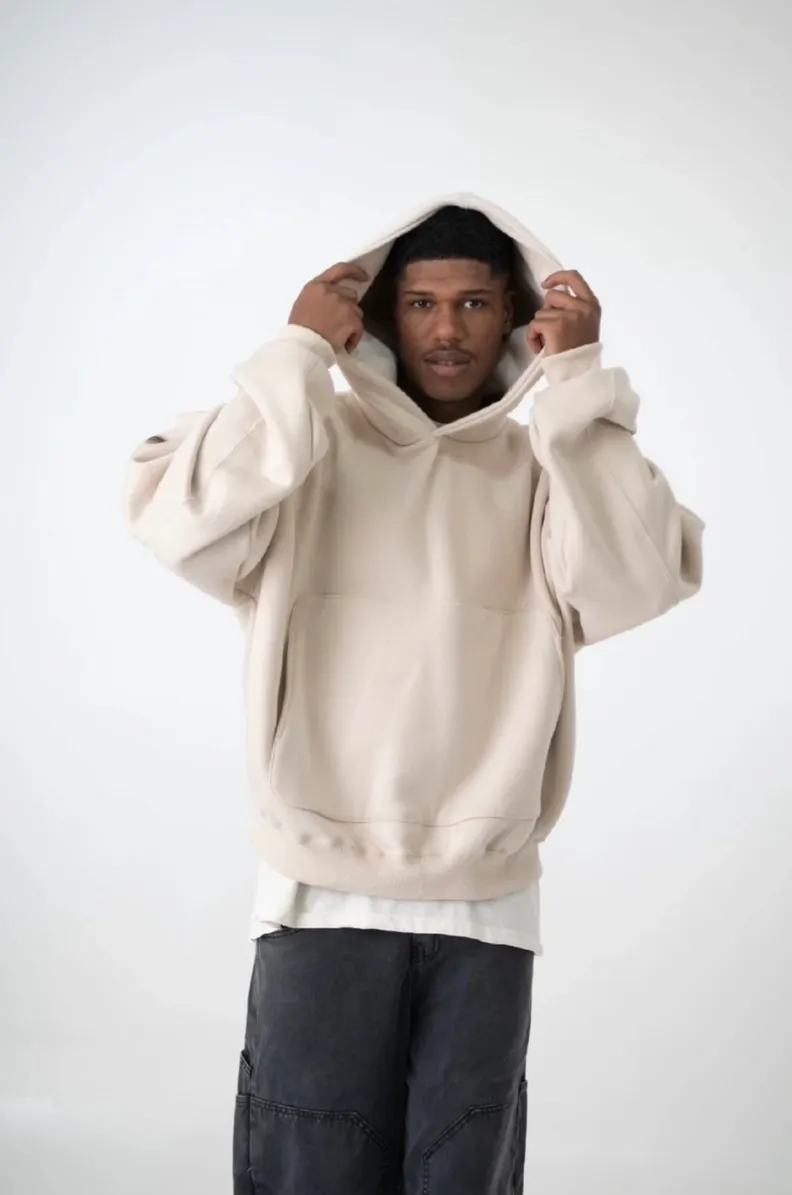
Men's gym wear is bought twice: once in the gym, once on the street. This guide specs both lives — the 5″/7″/9″ shorts decision with liner options, the hoodie GSM ladder from a 240 GSM layer to a 420 GSM heavyweight, and the wash-and-wear durability tests that keep logos alive past wash fifty.
Key takeaways
- Men's sizing is measured differently: waist relaxed and stretched, plus thigh, front rise and inseam — because most men's bottoms sit on an elastic waistband.
- Shorts are an architecture decision: inseam (5″/7″/9″) × liner (brief / compression / none) × shell weight. Spec all three or receive a surprise.
- Hoodies run on a GSM ladder: 240–280 light, 300–340 core, 360–420 heavyweight. The number is the product position.
- Durability is tested, not claimed: seam strength, abrasion, and logo survival after repeated washing — with the logo method matched to the fabric.
- For gyms and teams, the winning quote is a DDP door price across the full S–3XL run — no landed-cost surprises after the event budget is approved.
Men's sizing: measure the waistband twice
Men's activewear bottoms almost all close with elastic and a drawcord, so a single waist number lies. The spec sheet for shorts and joggers needs: waist relaxed and waist fully stretched, hip, thigh, front rise, and inseam — to the cuff for joggers, to the open hem for sweatpants (where extra length is stacking, not error). Peer lines run S–3XL as the standard range. Fit-approve on your market's size-M base sample, wear-test it (squat, lunge, sit — men's training shorts fail at the rise in a deep squat), wash it three times, re-measure, and sign the graded spec with ± tolerance — the same discipline as the women's guide, applied to a different block.
First-order size planning uses the same middle-weighted logic as women's bottoms (per 100 pcs: S15 / M25 / L25 / XL20 / 2XL10 / 3XL5) — but team and gym orders break the pattern: order to the actual roster, with a deliberate over-run in L/XL, because the member who gets the wrong size is the one who mentions it.
Shorts architecture: inseam × liner × shell
| Style | Shell (peer consensus) | GSM | Inseam | Liner options |
|---|---|---|---|---|
| Running short | Polyester/spandex 95/5 woven microstretch | 130–160 | 5″ (runner/bodybuilding) or 7″ | Brief mesh, or none |
| Gym training short | Poly/spandex interlock knit | 180–220 | 7″ (all-round default) or 9″ (tall/coverage) | Compression liner (15–25% spandex, can carry a phone pocket), brief, or none |
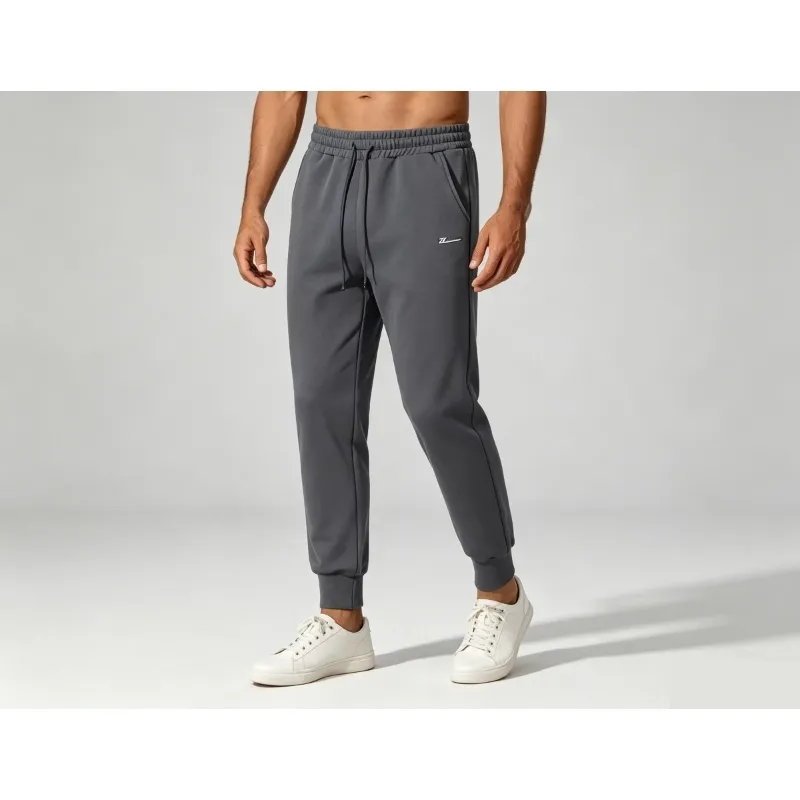
| Joggers / sweatpants | Cotton-poly fleece or French terry | 280–400 | Full length, cuffed or open hem | — |
Specs: GYMHUR custom shorts and MontForge's manufacturer-briefing guide for training shorts (accessed 2026-11-18).
Men's running shorts are typically 130–160 GSM polyester-spandex (95/5) woven with a 5″ or 7″ inseam; gym training shorts are 180–220 GSM knit with a 7″ or 9″ inseam — and the 7″ inseam is the all-round default when a buyer can only stock one.
Details that separate a considered short from a generic one: a drawcord that can't escape into the waistband channel, a liner that doesn't ride up (compression liners need their own fit check, not a guess), pocket placement tested with a phone actually in it during a run, and a gusset or split hem where the stride needs it.
Durability: the tests behind the claim
Men's gym wear dies three deaths: seams at the rise and inner thigh, abrasion where a barbell or gym bag rubs, and logo failure. The third is the brand-killer — a cracked chest print after two washes reads as a fake product, and gym buyers in our research name it explicitly. The defence is matching the logo method to the fabric:
| Logo method | Best for | Technical limits |
|---|---|---|
| Embroidery | Hoodies, joggers, tracksuits, caps — heavier knits (200+ GSM) | Puckers thin stretch knits; keep designs bold, not fine-lined |
| Silicone print | Leggings, shorts, performance tops — raised, rubbery, stretch-proof | Can't do fine lines; mould cost ~US$50–100 one-time (peer-quoted) |
| Heat transfer | Fine detail, multi-colour, small runs | Slightly firmer hand feel on the print area |
| Sublimation | All-over prints on polyester | Polyester only — but the print can never crack or peel, because it is the fabric |
| Screen print (elastic ink) | Flat placements, 1–6 colours, wash-durable | Ink must be elastic-rated for stretch fabrics |
Method guidance: Gosmano logo-branding knowledge base; SLSPOLO logo table; MontForge (accessed 2026-11-18).
Then verify like a buyer, not a believer: wash the PP sample repeatedly and inspect the logo at washes 1, 10 and beyond; pull-test seams at the rise; check colourfastness against the targets in our Activewear Buying Guide (≥ Grade 4, shrinkage <4%). A factory confident in durability will hand you the wash-tested sample without being asked twice.
The hoodie & tracksuit GSM ladder
| Tier | GSM | Fabric | Position |
|---|---|---|---|
| Lightweight | 240–280 | French terry / light fleece | Layering piece, warm-ups, spring drops |
| Core | 300–340 | Brushed fleece or French terry | The volume seller — gym-to-street staple |
| Heavyweight | 360–420 | Dense brushed fleece | Oversized streetwear, premium hand feel, winter |
| Tracksuit sets | 280–400 (CVC fleece ~320 typical) | Cotton-poly / CVC fleece; performance poly 250–300 | Matching top + bottom, team and retail sets |
Ladder: SDF Clothing hoodie specification (240–280 / 300–340 / 360–420); tracksuit ranges from MamoonWear and Ready One CVC fleece specs (accessed 2026-11-18).
Core streetwear hoodies use 300–340 GSM brushed fleece or French terry; heavyweight oversized styles use 360–420 GSM, and lightweight layering hoodies drop to 240–280 GSM — GSM is the fastest honest way to compare two hoodie quotes.
Care note for fleece: wash cold-to-warm (≤30–40 °C) inside-out to protect print and embroidery, tumble low or line dry, and spec pre-shrunk fabric with a shrinkage test under 3–5% — cotton-rich fleece is the one fabric family in these guides where shrinkage, not stretch, is the enemy.
The streetwear crossover: where the gym order becomes a fashion order
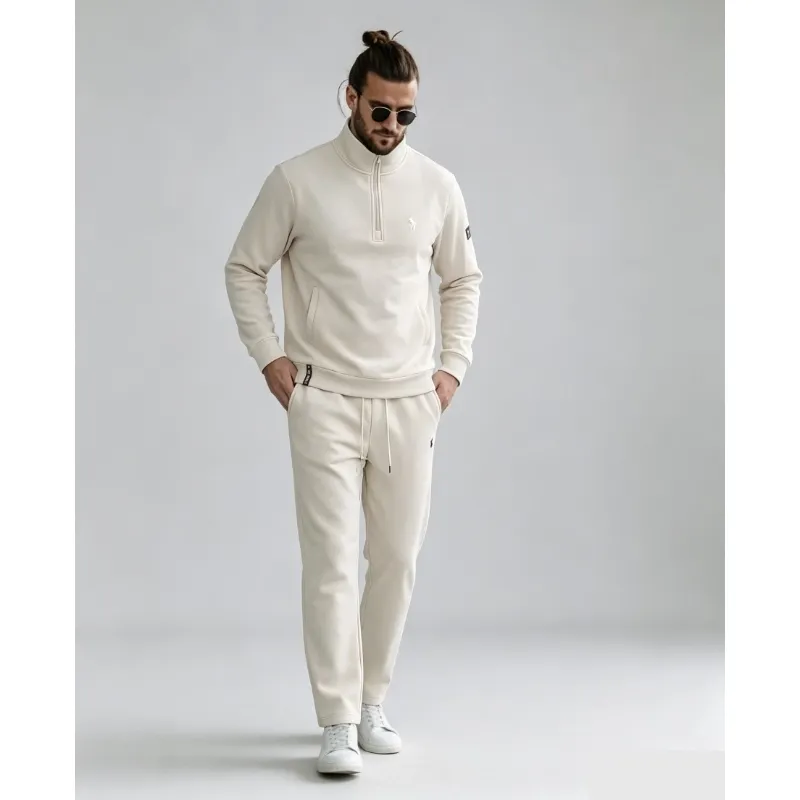
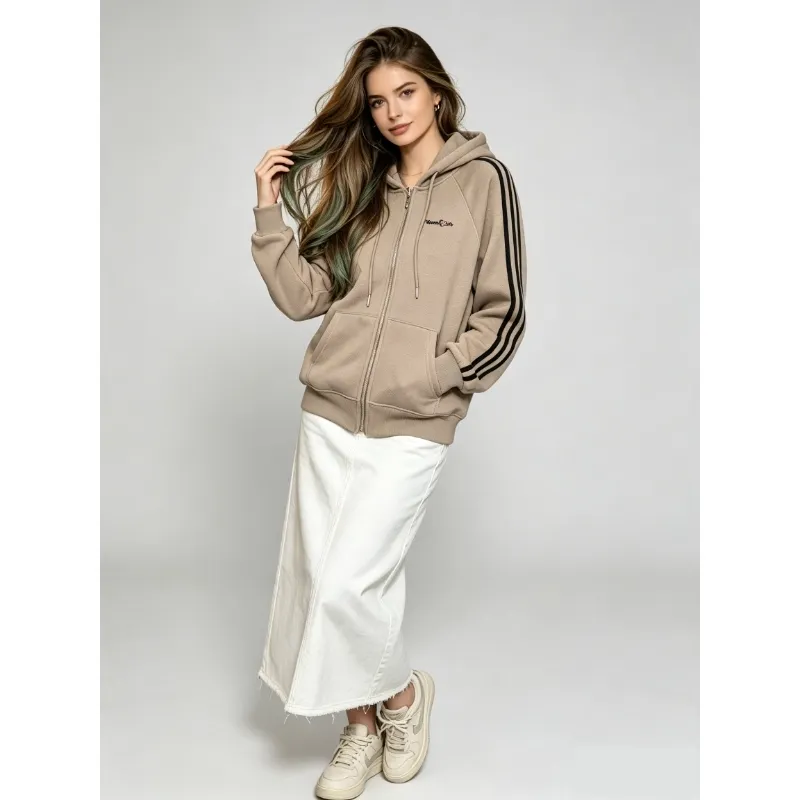
The commercial fact behind this guide's angle: the same customer buys the training short and the oversized hoodie, often in the same cart. Brands that win the crossover do three things. Oversized fits, graded honestly — a boxy, dropped-shoulder block is a different pattern, not a size-up; spec the body width and sleeve drop explicitly. Graphics with texture — embroidery, puff print and silicone give a heavyweight garment a hand-feel cheap prints can't imitate, and they survive the wash tests above. Matching sets — hoodie + jogger or tracksuit in one dye lot (the dye-lot discipline from the Yogawear Guide applies with full force: a mismatched set is unsellable as a set). Men's athleisure ranges from peer factories span poly-spandex performance knits through cotton-poly fleece and French terry at roughly 160–420 GSM, sizes S–3XL — one supplier, one PO, both lives of the product.
Gym & team buying: DDP and the full size run
Team buyers — gyms, clubs, corporate wellness — purchase differently from brands: the deadline is an event, the sizes are a roster, and the budget was approved as a single number. That is why the DDP door price matters here more than anywhere: FOB $12 becoming $18 landed after freight and duty is the classic way these orders blow up. Quote DDP, confirm the full S–3XL run in one production, choose embroidery or silicone for logos that must survive a season of industrial washing, and lock the reorder path — teams reorder the same kit for new members, and a factory holding your patterns and embroidery files makes that a two-week conversation instead of a new sampling cycle. The general SOP and terms framework is in our Activewear Buying Guide.
FAQ — men's gym wear sourcing, answered
What MOQ do custom men's gym wear manufacturers ask at the low end?
The same market structure as women's wear: stock styles with your logo from 10–100 pcs, full custom cut-and-sew around 100 pcs per style/colour at low-MOQ specialists, and 300–500 at standard factories (industry norms). The counting method — per style, per colour, mixed — is the number that matters.
5″, 7″ or 9″ — which shorts inseam should I stock?
7″ if you stock one: it is the all-round default across running and training. Add 5″ for runner/bodybuilding audiences and 9″ for tall customers and coverage-first markets. Then choose the liner deliberately — brief mesh for runners, compression (with phone pocket) for training, none for lifestyle shorts.
What GSM should a streetwear hoodie be?
300–340 GSM brushed fleece or French terry is the core tier most brands sell. Go 360–420 for a heavyweight oversized position, 240–280 for a layering piece. If a quote doesn't state GSM, you are not comparing hoodies — you are comparing adjectives.
Which logo method survives gym washing best?
On fleece and heavier knits, embroidery — it is thread, not a surface film. On stretch performance fabrics, silicone print. For all-over polyester prints, sublimation, which cannot crack because the ink becomes the fabric. The failure mode is a mismatch: standard screen print on a high-stretch fabric is the classic two-wash crack.
How do I start a men's gym clothing brand with no tech pack?
Start from reference garments: send pieces you rate, with notes on what to change. A factory set up for founders will build the tech pack (flats, BOM, graded spec) from them — ask for the days and the sample-fee credit rule up front, approve a PP sample, and only then commit to bulk.
Final checklist — men's line sign-off
- Waist spec'd relaxed and stretched; thigh, rise and inseam on the graded sheet
- Shorts architecture locked: inseam × liner × shell GSM, phone-in-pocket test done
- Hoodie tier chosen by GSM (240–280 / 300–340 / 360–420), fabric named (brushed fleece vs French terry)
- Logo method matched to fabric; wash-tested sample inspected for cracking
- Oversized styles patterned as their own block — not a size-up of the regular fit
- Sets cut from one dye lot; team orders quoted DDP across the full S–3XL run
- Fleece shrinkage controlled: pre-shrunk fabric, test result under 3–5%
Launching a men's or streetwear line? Start with the GSM conversation
Send your reference styles or a mood board with target weights. The reply specs every piece — shell, liner, GSM, logo method — so you can compare it against any quote on your desk.