Private Label Yoga Wear Manufacturer Guide: Low MOQ & Fit
Sourcing a private label yoga wear manufacturer at low MOQ? Fabric GSM tables, 6 squat-proof checks, seamless vs cut-and-sew, dye-lot rules — before you sample.
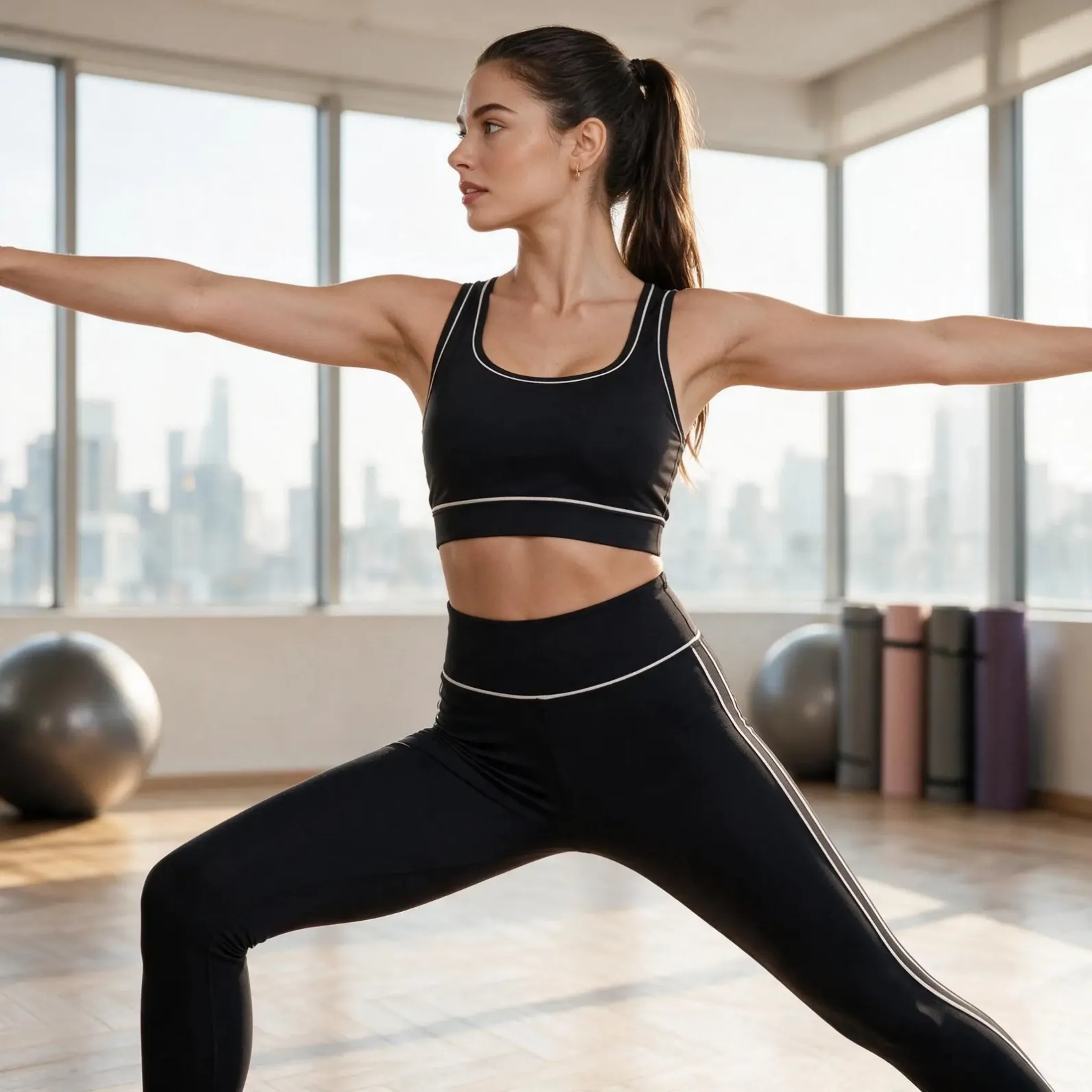
If you are sourcing a private label yoga wear manufacturer at low MOQ, the fabric spec decides everything downstream — returns, reviews, reorders. This guide gives you the GSM and blend numbers to specify, the six checks that make leggings genuinely squat-proof, and the dye-lot rule that keeps matched sets matched.
Key takeaways
- Specify fabric by blend + GSM + knit type, never by a marketing name. "Buttery soft" is not a spec; 75/25 nylon-spandex interlock at 240 GSM is.
- Squat-proof is a system: interlock double-knit, 260–320 GSM for compression styles, tested on the lightest colourway first.
- Seamless (Santoni) and cut-and-sew solve different problems — and carry different MOQ norms (~200 vs ~100 pcs, industry norm).
- The waistband failure buyers complain about most — rolling — is a construction error, not a fabric error. Double-layer self-fabric fixes it.
- Ask how the MOQ is counted (per style? per colour? mixed sizes?) before you compare any two quotes.
Start with the fabric table, not the catalogue
Every yoga wear disaster we see in buyer reviews — sheer leggings, sets that don't match, waistbands that roll by week three — is traceable to a fabric decision made in the first email. Yoga is a stretch-and-hold discipline: the garment is at full extension, under studio lighting, often in pale colours. That is the harshest possible test for a knit. So specify like an engineer:
| Product / practice | Composition (peer consensus) | GSM | Why this spec |
|---|---|---|---|
| Leggings — premium studio yoga | Nylon 75–80% / spandex 20–25% | 220–260 | Soft hand feel, four-way stretch, holds shape through a full class |
| Leggings — sculpting / compression, squat-proof priority | Nylon 72–78% / spandex 22–28%, interlock double-knit | 260–320 | Double-knit structure is what blocks show-through at full stretch |
| Leggings — lightweight / hot yoga | Nylon-spandex, single knit | 180–200 | Breathability over coverage — never spec this in white or pastels |
| Leggings — polyester route (prints) | Polyester 75–87% / spandex 13–25% | 230–280 | Sublimation-ready: ink becomes part of the fabric, prints never crack or peel |
| Seamless yoga sets | Nylon ~87% / spandex ~13% (peers also quote 85/15, 92/8) | 220–300 | Knitted-in compression zones and ribbed waistband, no side seams |
| Tanks & yoga tops | Poly/nylon blend | 140–180 | Drape and airflow; pair with a built-in bra only at the higher end |
Ranges synthesised from top-ranking peer manufacturer spec pages (SLSPOLO, BraveCF, Sadat/Seam Apparel, Sebs Fashion, Made-in-China listings), cross-checked across sources. They are the market's working consensus, not one factory's promise.
Nylon or polyester? Nylon wins on hand feel and abrasion resistance — it is what premium yoga brands are built on. Polyester wins on price, drying speed and print: it is the only route for all-over sublimation. A recycled option exists for both — recycled polyester (rPET) and recycled nylon — but read the recycled-fabrics section below before you print "GRS" on a hangtag.
Premium yoga leggings are typically knitted from 75–80% nylon and 20–25% spandex at 220–260 GSM; squat-proof compression styles use 260–320 GSM double-knit interlock, because below roughly 220 GSM pale colourways risk sheerness at full stretch.
Seamless or cut-and-sew? Decide by product, not by fashion
Seamless garments are knitted as a tube on Italian Santoni circular machines — no side seams, compression and mesh zones programmed directly into the knit, less cutting waste. The result is the smooth, second-skin silhouette behind most seamless yoga sets. The constraints are real: colour and pattern options are narrower, artwork is limited to knit-in texture, and the MOQ norm sits higher — around 200 pcs at low-MOQ peers (industry norm).
Cut-and-sew is the flexible route: any fabric, any colour, pockets, panels, zips, contrast piping — and a lower entry MOQ, around 100 pcs per style/colour at low-MOQ specialists (industry norm). If your design has a phone pocket, a flare leg, or a print, it is cut-and-sew by definition.
- Choose seamless for: core sets, ribbed textures, zoned compression, minimal-waste positioning.
- Choose cut-and-sew for: pockets, flare/no-front-seam fashion cuts, sublimation prints, mixed-fabric panels.
- Ask whether both constructions can run in one order under one QC standard — splitting them across two suppliers is how set colourways drift apart.
The six squat-proof checks (in the order factories run them)
"Squat-proof" is the most abused phrase in this category. Here is the actual test sequence behind it — use it as your sampling checklist:
- Test the lightest colourway first. If white or blush passes, black will. Factories that test black first are hiding the result.
- Interlock / double-knit construction for any style sold on coverage — two interlocked layers, not a single jersey.
- GSM in the 260–320 band for compression and sculpting styles (see table above).
- Stretch test at working extension: fabric pulled to the extension of a deep squat, over a contrasting board, under bright light (~1,000 lux).
- Recovery ≥98% after extension — fabric that doesn't come back bags at the knee by the second wear.
- Shrinkage under 4% after three washes, so the size you approved is the size your customer receives.
Waistband and gusset: the engineering buyers feel but can't name
Two construction details decide whether a legging feels premium or gets returned. The waistband: a double-layer, self-fabric high-rise band (optionally with a power-mesh inner layer) stays put because fabric and body move together. A single-layer band with elastic sewn in rolls — elastic and knit recover at different rates, and the band folds over itself. That is a construction lesson factories learn once and buyers pay for repeatedly. The gusset: a diamond or triangle crotch gusset spreads tension across the seam instead of concentrating it at one point, and removing the front rise seam gives the "no front seam" finish that eliminates the camel-toe complaint entirely. Seams themselves should be flatlock (four-needle, six-thread, ISO 607): the seam lies flat on both sides, stretches with the fabric, and doesn't chafe in a 90-minute class.
Matched sets live or die on dye lots
A yoga set is two garments that must read as one colour under retail lighting and phone cameras. If the bra and the legging are dyed in different lots, they won't. The discipline is boring and absolute: lab dips approved before bulk dyeing (typically 3–5 days per round, industry norm), top and bottom cut from the same dye lot, and lot records kept so your reorder six months later matches the first run. When you evaluate a supplier, ask one question: "How do you guarantee set colour matching?" The answer tells you more than the price list.
Ordering yoga wear: the short SOP
The full sourcing operating system — tech packs, AQL, cost breakdown — lives in our Activewear Buying Guide. The yoga-specific timing to plan around: a first custom order typically runs 6–9 weeks from approved tech pack to dispatch, and 60–100 days door-to-door including sea freight (industry consensus). Samples on stock styles with your logo run about 5–7 days; a full custom (OEM) sample 12–21 days. Never approve bulk before the PP (pre-production) sample — sewn in bulk fabric, measured against the sealed spec — is signed off. That single gate prevents most bulk disasters.
Care instructions to print on your label (nylon/spandex and polyester/spandex): machine wash cold (≤30 °C), gentle, inside-out, with like colours; mild detergent; no fabric softener — it coats the wicking channels; no bleach; line-dry in shade; never tumble dry or iron — elastane degrades with heat and loses stretch permanently.
Recycled fabrics and the GRS rule
Recycled blends are genuinely available — peers quote recycled-polyester leggings at 84% rPET / 16% spandex (240–310 GSM) and recycled-nylon styles at 80/20 (200–220 GSM). But GRS (Global Recycled Standard) is a chain-of-custody system: it requires at least 20% recycled content and a Transaction Certificate (TC) for every lot. The honest claim — and the only one that survives a marketplace audit — is "GRS-certified fabrics sourced from certified mills, TC provided with your shipment." A factory claiming its own GRS scope should show you the certificate. Ask for the document, not the logo.
Indicative FOB China prices for full-custom leggings (220–280 GSM nylon-spandex) run US$9.50–17.50 per piece at 100 pieces, falling to US$7.50–14.00 at 500+ pieces; seamless sets run US$20–27.50 at 100 pieces and US$16–22 at 500+.
Source: SLSPOLO published price-tier table, November 2026 — a competitor reference for planning, not a Breez quotation. Your price is fixed in writing after sample approval.
FAQ — what buyers ask before the first order
What MOQ should I expect from a private label yoga wear manufacturer?
It depends on how the MOQ is counted — that is the real question. Industry norms: stock styles with your logo start at 10–100 pcs; full custom cut-and-sew is typically 100 pcs per style per colour at low-MOQ specialists; seamless runs around 200 pcs; standard factories ask 300–500 per style per colour. Always ask: per style, per colour, or per order — and can sizes and colours mix inside it?
Seamless or cut-and-sew for my first yoga set?
Seamless if your design is a clean, textured set with knit-in compression and you can meet ~200 pcs. Cut-and-sew if you need pockets, a flare leg, prints, or a lower entry quantity (~100 pcs). Many brands launch cut-and-sew first, then add a seamless core set once volumes justify it.
How do I know the leggings are really squat-proof before bulk?
Run the six-check sequence on your PP sample in the lightest colourway: interlock fabric, 260–320 GSM for compression styles, stretch it to full squat extension over a contrasting surface under bright light, then wash it three times and re-check recovery and shrinkage (<4%). Approve nothing you haven't stretched yourself.
How long does a first custom yoga wear order take?
Plan 6–9 weeks factory-side from approved tech pack to dispatch, and 60–100 days door-to-door with sea freight (industry consensus across Bloomto, SMB Sports and SLSPOLO timelines). Sampling adds 1–3 weeks before that, depending on rounds of revision.
Can I use recycled fabric and still make a GRS claim?
Yes — if the mill is GRS-certified and the Transaction Certificate for your fabric lot travels with the order. GRS requires ≥20% recycled content with full chain of custody. Phrase your claim as "GRS-certified fabrics from certified mills, TC provided" unless you hold your own scope certificate.
What does the sample cost, and is it credited?
Peer norm: US$50–300 per piece for custom samples (often 2–3× the bulk unit price), frequently credited against bulk orders of 300+ pcs. Confirm the credit rule in writing before sampling — it is a small number that reveals how a factory treats small brands.
Final checklist — before you wire the deposit
- Fabric specified by blend %, GSM and knit type — in the tech pack, not the chat history
- Lightest colourway passed the squat-proof stretch test on the PP sample
- Waistband is double-layer self-fabric; gusset and flatlock confirmed in the construction spec
- Set top and bottom cut from the same dye lot; lab dips approved before bulk dyeing
- MOQ counting method stated in writing (per style / per colour / mixed)
- Logo method chosen for the fabric (silicone or heat transfer on stretch knits; sublimation only on polyester)
- Private label means the full kit: woven label, care label, hangtag, packaging — not logo printing alone
- Sample fee and its bulk-credit rule confirmed; PP sample approval gate agreed
Send us your tech pack — or just a reference photo
No tech pack yet? Send a reference sample photo, your target fabric feel and quantity. You'll get a costed reply with the MOQ counting method stated plainly — no adjectives, just numbers.