Aug 15, 2026Buying Guides
Quality Control for Custom Activewear Orders
A practical quality-control framework for custom activewear orders from pre-production handoff through final release.
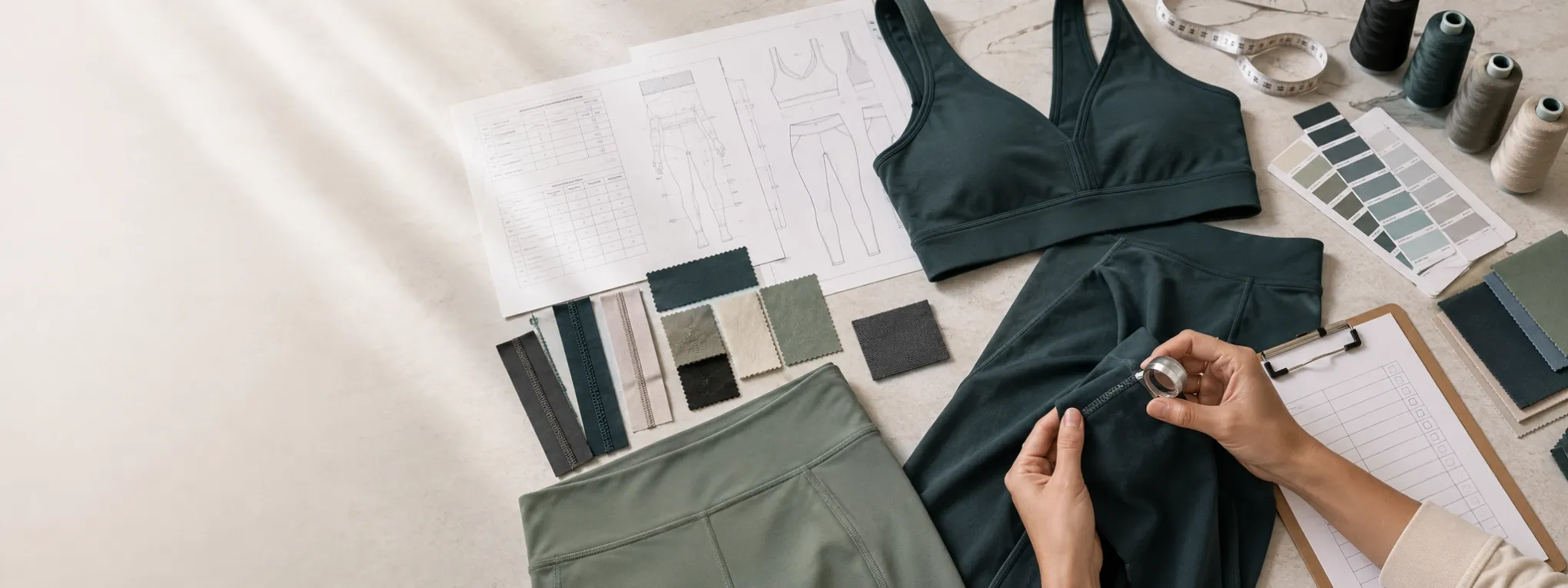
Quality control for custom activewear starts before bulk inspection by freezing the approved product, materials, measurements, workmanship, components, artwork and packing criteria. Incoming, in-process and final checks should compare production with those references, record findings and corrective actions, and name who can release or stop the order. Inspection cannot replace unresolved product development.
Brands need quality criteria that reflect the approved product instead of relying on a generic final inspection at the end of production.
Quality control starts before production. It depends on agreed materials, measurements, construction, appearance, artwork and packing references.
What buyers should decide about quality control for custom activewear orders
Controlling references
Identify the approved sample, specification, measurement table, fabric, color, artwork and packing files that define acceptance.
In-process focus
Select checkpoints where errors can still be corrected, including material receipt, cutting, first output, sewing or finishing stages relevant to the product.
Functional checks
Evaluate zippers, closures, pockets, elastic, straps, cups, drawcords and other components according to the approved design.
Release record
Final review should document findings, accepted deviations, rework and release responsibility.
A practical development process
Step 1: Freeze the approved product and quality criteria
Freeze the approved product and quality criteria.
Step 2: Confirm incoming materials and trims against references
Confirm incoming materials and trims against references.
Step 3: Use in-process checks for high-risk operations
Use in-process checks for high-risk operations.
Step 4: Inspect finished garments for measurement, workmanship, function and appearance
Inspect finished garments for measurement, workmanship, function and appearance.
Step 5: Confirm packing, quantity and release documentation
Confirm packing, quantity and release documentation.
Buyer checklist
1. Approved sample and specification
2. Material, trim and color identity
3. Measurements and tolerances
4. Workmanship and component function
5. Artwork, labels and packaging
6. Finding, rework and release records
Turn the checklist into an internal approval record
For this decision, the buyer record should cover approved sample and specification, material, trim and color identity, measurements and tolerances, workmanship and component function, artwork, labels and packaging, finding, rework and release records. Give every item an owner and mark it confirmed, pending evidence, open to recommendation or blocked. Link approvals to the exact file, sample, material, color or commercial response instead of relying on memory. This lets design, sourcing, merchandising and quality teams see the same status before the project advances.
Retain the record with approved product and tolerance standard, in-process and final inspection record, corrective-action, recheck and release decision. When a decision changes, update the affected styles and approval references, then confirm whether quotation, sampling or production instructions also need revision. A visible change trail reduces contradictory comments and gives the supplier a clearer basis for the next action.
Common sourcing risks to control
Starting QC at final packing
Late detection increases rework and may not recover material or construction errors.
Using generic tolerances
Acceptance should reflect the product, measurement point and approved agreement.
Ignoring color and artwork references
Visual consistency needs a controlling standard and suitable inspection conditions.
Treating every defect equally
Classify findings by impact and agree how they affect rework or release.
Decision example: one order needs style-specific control points
An order contains zip-front sports bras and pocket leggings. The bra inspection should pay particular attention to zipper function and protection, underband, cup or lining placement and strap symmetry. The legging plan should prioritize rise, inseam, waistband, gusset, pocket placement, stretch seams and opacity-related workmanship. Shared checks such as color, labels and packing still apply, but a single generic checklist would miss the features most likely to affect use. Product risk should shape incoming, in-process and final review.
What makes the inquiry ready for the next step
Before bulk production, confirm the approved sample and specification, critical measurements and tolerances, material and color references, component functions, artwork, label placement, packing and reporting expectations. Identify which findings require rework, buyer review or an immediate production stop, and record who can authorize release.
What trustworthy supplier evidence looks like
Build the inspection plan from product risk
A zip-front bra, bonded legging and fleece hoodie do not share identical failure points. Identify critical measurements, stretch seams, closures, elastic, prints, pockets, shade matching and packing details for each style. Generic inspection language can miss the feature most likely to affect the buyer's customer.
Keep correction and release traceable
When a finding requires rework, record the affected quantity or scope, corrective action, re-inspection result and release owner. A verbal statement that the issue was fixed is not enough for a buyer deciding whether the order matches the approved standard.
Questions to resolve before quotation or sampling
1. Which approved reference controls each inspection criterion?
2. What product-specific risks require in-process checks?
3. How are nonconforming units contained and rechecked?
4. Who has authority to release packing and shipment?
How Breez Sportswear supports the next step
Breez Sportswear can align quality discussions with the approved style record and the risks of the actual garment. The buyer should confirm required inspection scope, reporting and release expectations as part of the project rather than relying on a universal quality claim.
The company does not publish unsupported guarantees for MOQ, delivery, certifications or product performance. Those items are confirmed for the actual project after the scope and evidence are available.
Related Breez resources
Frequently asked questions
What should be included in an activewear inspection?
Check identity, materials, measurements, workmanship, component function, appearance, artwork, labels, packing and quantity according to the approved record.
Does a passed sample guarantee production?
No. The sample establishes a reference; production controls and inspection verify whether bulk output follows it.
When should tolerances be agreed?
Confirm them before production handoff, with special attention to stretch garments and critical fit measurements.
How should rework be approved?
Record the finding, corrective action, re-inspection result and release decision.
Discuss your sportswear project
Email breezsportswear@126.com or WhatsApp +86 181 4865 3131 with your product category, references, size range, material direction, branding needs and quantity range. Breez Sportswear will use the information to identify the next questions for development and quotation.